If you’re searching is indica or sativa better for pain, you’re probably dealing with something specific—chronic aches, inflammation, nerve pain, or sore muscles that won’t quit. Cannabis comes up a lot in pain conversations, but the answers online are often oversimplified.
Here’s the straight truth: pain relief isn’t just about indica vs sativa. It comes down to cannabinoids, terpene profiles, dosage, and how you consume cannabis. Strain labels can point you in a direction, but they’re not the full story.
Explore lab-tested cannabis products designed for pain relief in our Denver shop.
How Cannabis Helps With Pain
Cannabis works on pain because it interacts directly with the body’s internal regulation system.
The endocannabinoid system (ECS) helps control pain signaling, inflammation, mood, and muscle tension. When cannabinoids enter the body, they influence how pain signals are sent and perceived.
- THC can reduce pain perception by altering how the brain processes discomfort. This is why THC-rich products are often used for chronic or intense pain.
- CBD plays a larger role in managing inflammation, nerve pain, and sensitivity without intoxication.
- Different types of pain may respond better to specific cannabinoids, which is why answering is indica or sativa better for pain requires personalization.
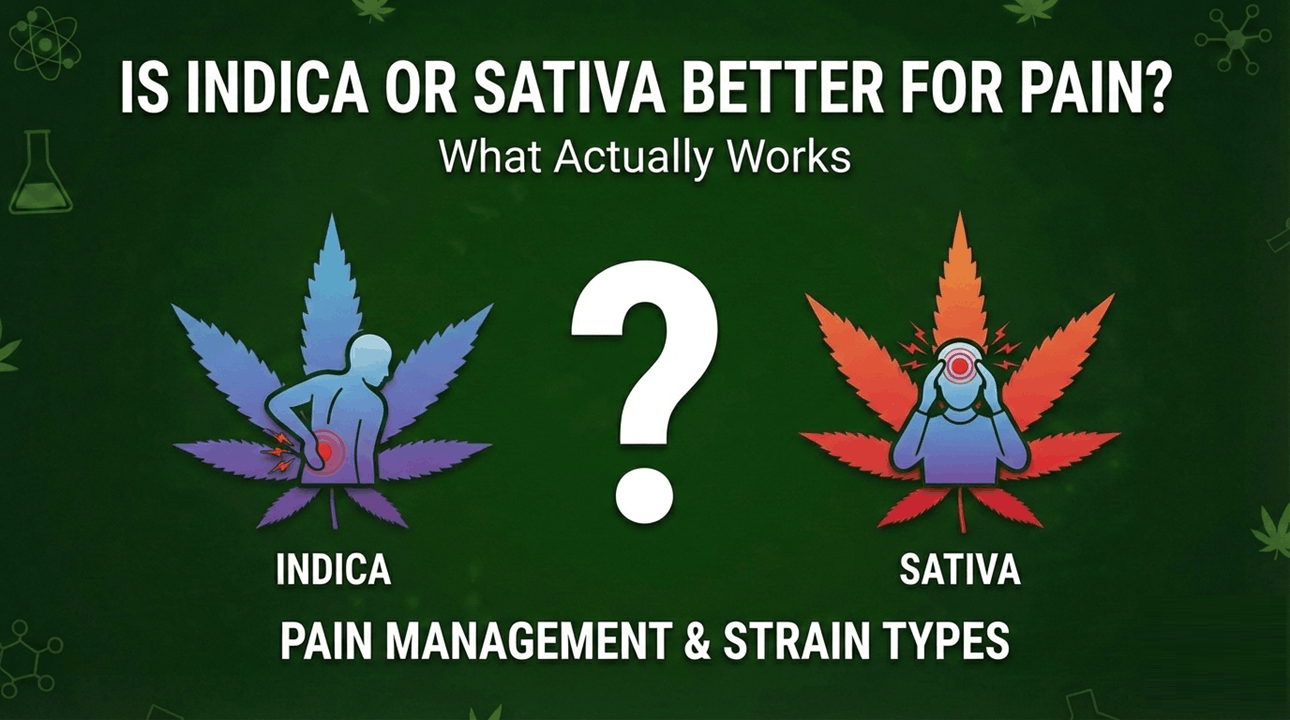
This is why asking is indica or sativa better for pain is a good starting question—but not the final answer.
Indica vs Sativa for Pain: The Traditional View
When considering is indica or sativa better for pain, traditional beliefs suggest:
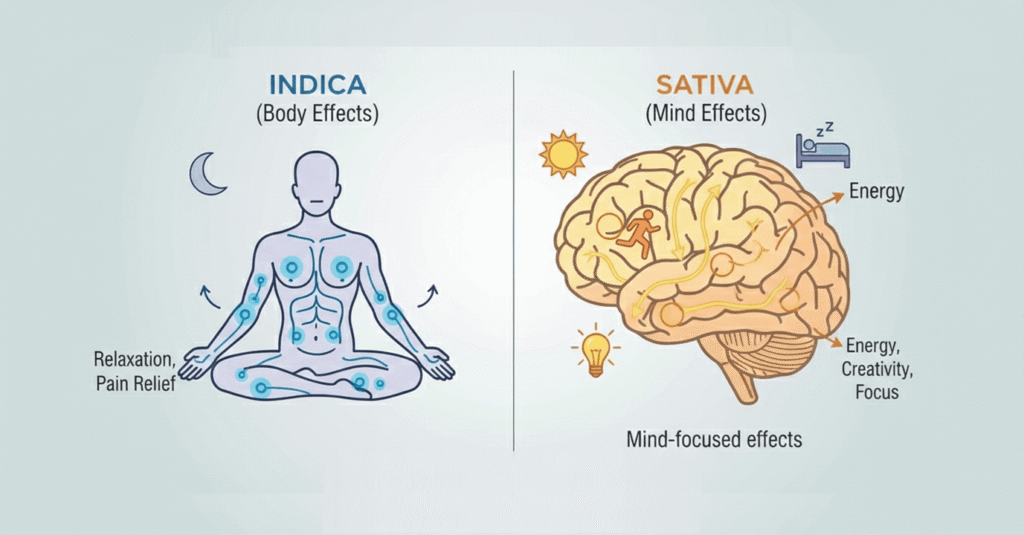
- Indica strains are often associated with body relaxation, muscle relief, and physical calm.
- Sativa strains are linked to mental stimulation, focus, and lighter body effects.
- Pain sufferers were historically steered toward indica for body pain and sativa for functional daytime relief.
The problem? Most modern cannabis strains are hybrids, and effects vary more by chemistry than by name. Two “indica” strains can feel completely different depending on terpene content and THC levels.
So while the indica vs sativa distinction still helps guide expectations, it shouldn’t be treated as a rulebook.
Is Indica Better for Pain?
For many asking is indica or sativa better for pain, indica-leaning strains are often preferred for:
Indica-leaning effects often include:
- Deep body relaxation that eases muscle soreness
- Reduced tension and stiffness
- A calming, grounding sensation that helps people rest
- Better relief for nighttime pain or pain that interferes with sleep
This is why indica is frequently chosen for chronic pain, joint discomfort, back pain, and muscle recovery. The downside is that higher doses can lead to sedation or couch-lock, which isn’t ideal for daytime use.
Indica isn’t automatically better for pain—but for body-heavy pain and evening relief, it’s often the more comfortable option.

Is Sativa Better for Pain?
While indica-leaning strains are often chosen for body-heavy pain relief, sativa-leaning cannabis can be helpful in specific situations, especially during the day. Some people prefer sativa for pain linked to fatigue, stiffness, or low motivation, as it can provide a more uplifting, energizing effect that encourages movement and activity.
However, high-THC sativas may increase discomfort or anxiety for some, so low doses and attention to terpene profiles are critical when asking, is indica or sativa better for pain.
The Role of Terpenes in Pain Relief (More Important Than Indica vs Sativa)
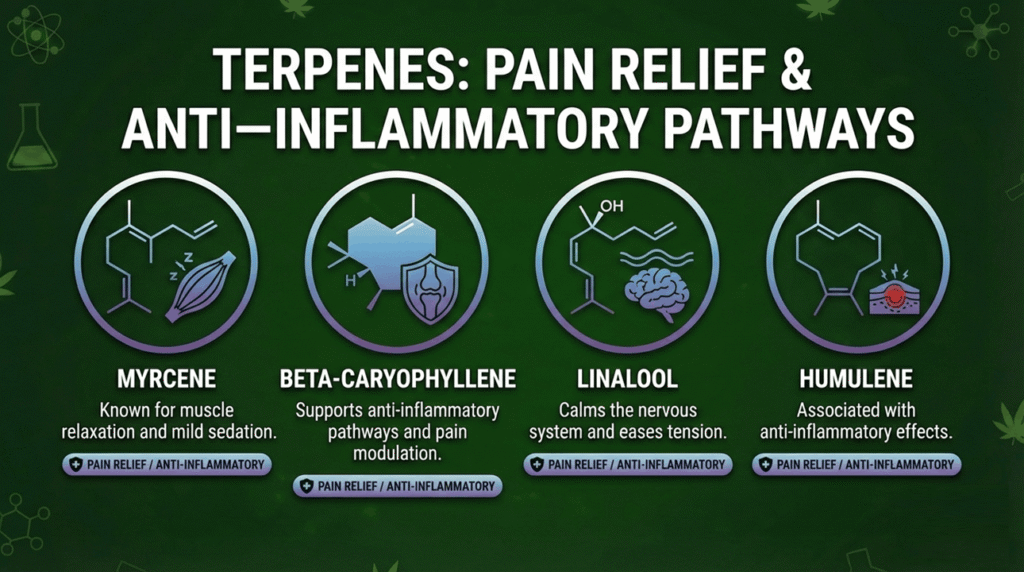
When asking is indica or sativa better for pain, the truth is terpenes often matter more than strain labels. Terpenes are aromatic compounds that influence both the sensory experience and medicinal effects of cannabis. Certain terpenes are particularly effective at easing physical discomfort, reducing inflammation, and promoting relaxation.
Pain-Relief Terpenes to Look For
- Myrcene – Known for muscle relaxation and mild sedation
- Beta-Caryophyllene – Supports anti-inflammatory pathways and pain modulation
- Linalool – Calms the nervous system and eases tension
- Humulene – Associated with anti-inflammatory effects
Best Cannabis Products for Pain Relief
Cannabis comes in multiple forms, each suited to different pain scenarios. Choosing the right product can make a significant difference in managing discomfort effectively.
Flower & Pre-Rolls
- Fast onset, making it easier to adjust dose according to pain intensity
- Ideal for sudden or breakthrough pain
- Ask about strain-specific pre-roll bundles available in our Denver shop for targeted relief
THC Gummies & Edibles
- Long-lasting effects, especially useful for chronic pain or nighttime relief
- Stronger body effects due to first-pass metabolism in the liver
- Best for users experienced in dosing, who can control intake carefully
Topicals & Transdermals
- Provide localized relief without psychoactive effects
- Popular for joint, muscle, or sports-related pain
- Explore cannabis-infused topicals and transdermal options in our Denver shop
Indica vs Sativa for Different Types of Pain
Cannabis can address several types of pain, but the choice of strain or product often depends on the pain profile and the user’s individual response.
- Chronic pain and inflammation – Indica-leaning strains or balanced hybrids with anti-inflammatory terpenes like beta-caryophyllene and humulene often work best.
- Muscle and joint pain – Myrcene-rich indica strains or topicals can relax muscles and reduce tension.
- Nerve pain – CBD-dominant or balanced THC/CBD hybrids may help regulate nerve signaling.
- Pain with sleep disruption – Indica-leaning strains at night can provide both body relaxation and improved rest.
Even though trends exist, personal response matters most. What works for one person’s back pain may not work for another’s migraine or nerve discomfort.
Common Mistakes When Using Cannabis for Pain
Many users unintentionally reduce effectiveness or increase side effects by making these mistakes:
- Overusing high-THC products – More isn’t always better; it can cause anxiety, drowsiness, or tolerance issues.
- Assuming “stronger = better” – Terpenes and cannabinoid ratios often matter more than THC percentage.
- Ignoring terpenes – These compounds significantly influence pain relief and relaxation.
- Using edibles without patience – Edibles take longer to work; impatience can lead to overconsumption.
- Combining cannabis with alcohol for pain – Can increase sedation or liver strain and reduce pain management clarity.
Frequently Asked Questions: Is Indica or Sativa Better for Pain?
Is indica or sativa better for pain overall?
Indica-leaning strains are often preferred for body-focused pain relief and evening use, but terpene profile, THC/CBD ratios, and dosing matter more than labels. Hybrids with calming terpenes can also be highly effective.
Can sativa help with chronic pain?
Yes, sativa-leaning strains can help, particularly for daytime pain, fatigue, or stiffness. Low doses are usually safest, as high-THC sativas may increase anxiety or discomfort in sensitive users.
Are edibles good for pain relief?
Edibles provide long-lasting relief, making them excellent for chronic pain or nighttime use. Careful dose control is essential, as effects are delayed and metabolized more strongly in the liver.
What’s the best THC level for pain?
Low-to-moderate THC often works best for most users, especially when paired with beneficial terpenes. High doses can cause unwanted sedation, tolerance buildup, or anxiety.
Choosing the Right Cannabis for Pain in Denver
When selecting products for pain relief:
- Lab testing and terpene transparency are essential to know what compounds are present.
- Match the product type to your pain type: edibles for long-lasting chronic pain, topicals for localized joint or muscle discomfort, flower for fast relief.
- Get guidance from knowledgeable staff – They can recommend strain-leaning options, dosing strategies, and delivery methods.
- Start low and adjust slowly – This reduces side effects and identifies the most effective dose.
Browse lab-tested cannabis products for pain relief in our Denver shop.

Final Thoughts: Is Indica or Sativa Better for Pain?
There’s no single answer to is indica or sativa better for pain. Most people achieve the best relief by focusing on:
- Terpene profiles (myrcene, linalool, beta-caryophyllene)
- THC/CBD ratio and dose
- Product type (flower, edibles, topicals)
- Timing (day vs night)
Indica-leaning strains are typically better for body relaxation and nighttime pain, while sativa-leaning or hybrid options may help with daytime activity and mild chronic discomfort.
Encourage informed experimentation and responsible use. For long-lasting relief, learn how storage affects potency in our guide on does THC gummies expire.