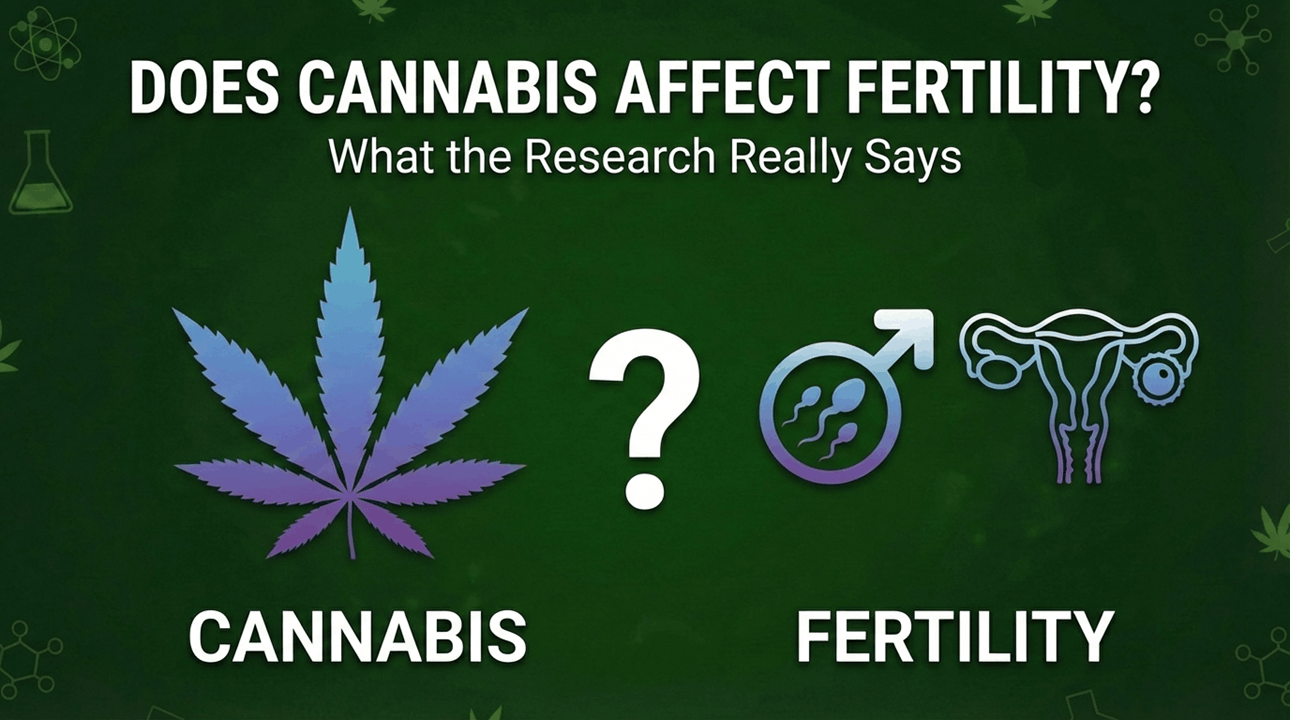
Many people search does cannabis affect fertility because cannabis use is becoming more common among adults who are planning families, trying to conceive, or thinking ahead about reproductive health. Questions often come up around pregnancy safety, hormone balance, and whether THC or CBD can interfere with conception.
The short answer: research is still evolving. Current evidence suggests cannabis may influence fertility in some people, but effects vary widely between men and women. Dose, frequency of use, product type, and individual biology all play a role. This isn’t a one-size-fits-all issue—and it’s not as simple as “cannabis is bad for fertility.”
Explore lab-tested cannabis products in our Denver shop.
How Fertility Works in Men and Women
Before diving deeper into whether cannabis affects fertility, it helps to understand the basics of how fertility works.
Male fertility basics center on sperm health:
- Sperm count (how many sperm are produced)
- Motility (how well sperm move)
- Morphology (sperm shape and structure)
Female fertility basics focus on hormonal balance and timing:
- Regular ovulation
- Stable reproductive hormones (estrogen, progesterone)
- Egg quality and uterine readiness
Hormones play a key role in both systems, and they are sensitive to external influences like stress, sleep, diet, medications—and potentially cannabis use.
Does Cannabis Affect Male Fertility?
Research on whether cannabis affects fertility in men has mostly focused on THC and sperm health.
Some studies suggest that heavy or long-term cannabis use may be associated with:
- Lower sperm count
- Reduced sperm motility
- Changes in sperm shape
THC may also influence testosterone levels, particularly with frequent use. However, these effects are not consistently seen in occasional users.
One important point: many observed changes appear to be reversible after reducing or stopping cannabis use. At this time, there’s no strong evidence proving permanent fertility damage from moderate cannabis consumption, but heavy use may increase risk.
Does Cannabis Affect Female Fertility?
When it comes to women, the question of does cannabis affect fertility is more complex—and research is more limited.
Potential areas of impact include:
- Ovulation timing, especially with frequent THC exposure
- Menstrual cycle regularity
- Hormonal signaling involved in egg release and implantation
The endocannabinoid system plays a role in female reproductive processes, which means THC may influence hormone communication. That said, human studies show mixed and inconclusive results.
Frequency, dose, and life stage (such as actively trying to conceive vs. general reproductive health) appear to matter more than occasional use.
The Role of the Endocannabinoid System in Fertility
An important piece of the puzzle is the endocannabinoid system (ECS)—a network of receptors found throughout the body, including reproductive organs.
The ECS helps regulate:
- Hormone signaling
- Ovulation and sperm function
- Implantation processes
THC and CBD interact with ECS receptors, which is why cannabis may influence fertility-related functions. Balance within this system is key—too much external cannabinoid input may disrupt natural signaling, especially with frequent or high-dose use.
THC vs CBD: Do They Impact Fertility Differently?
THC and CBD behave very differently in the body.
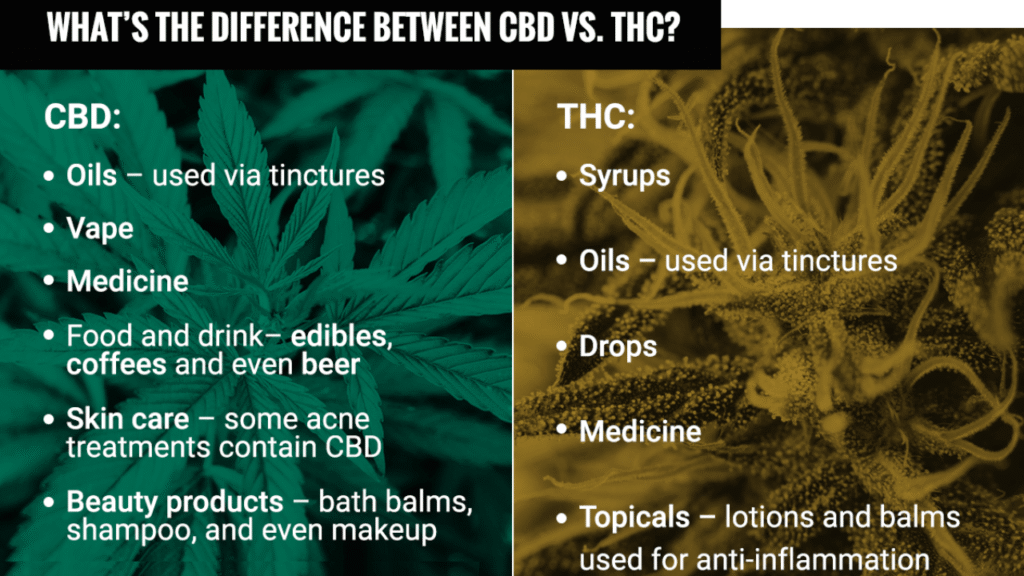
THC:
- Psychoactive
- Interacts strongly with ECS receptors
- More likely to influence hormones and reproductive signaling
CBD:
- Non-intoxicating
- Indirect ECS interaction
- Far less studied in fertility-related research
Most fertility-related concerns focus on THC. CBD is often viewed as lower risk, but human data is still limited, especially for long-term use. “Natural” does not automatically mean risk-free.
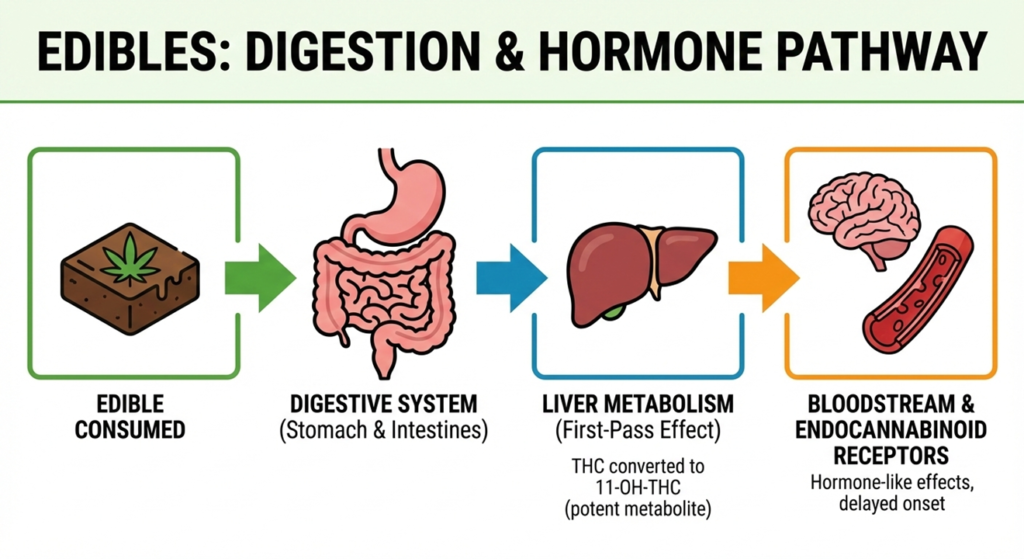
Does Cannabis Affect Fertility Through Edibles?
Edibles introduce another variable when asking does cannabis affect fertility.
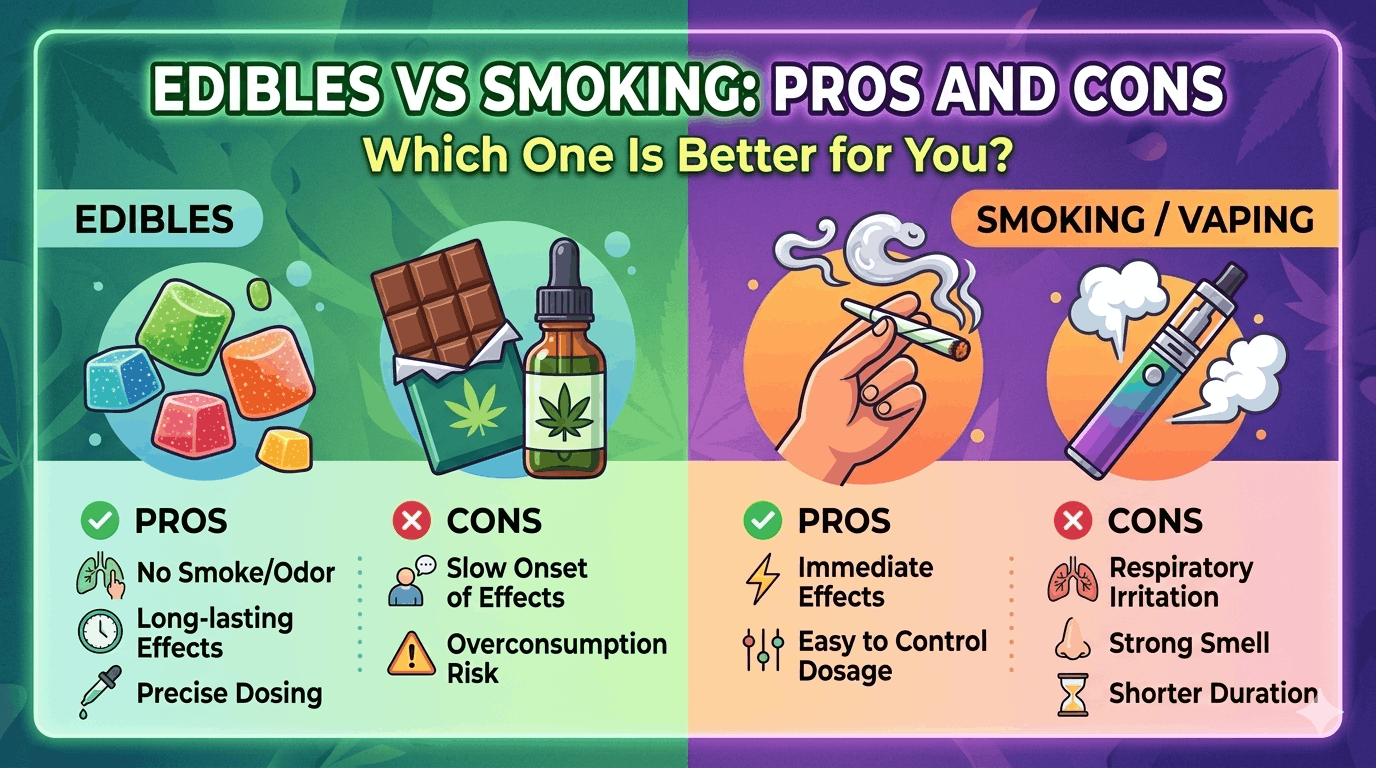
Unlike smoking or vaping, edibles go through first-pass metabolism in the liver, which:
- Produces stronger THC metabolites
- Extends duration of effects
- Increases total cannabinoid exposure
This longer exposure window may amplify hormonal interactions, especially with frequent edible use. Because dosing is harder to control, edibles may pose a higher risk for unintended overconsumption compared to inhaled methods.
Browse THC gummies and cannabis edibles in our Denver shop.
Frequently Asked Questions: Does Cannabis Affect Fertility?
Many readers searching does cannabis affect fertility want clear, evidence-based answers. Below are the most common questions people ask when researching how cannabis may influence reproductive health.
Does cannabis lower sperm count?
Research suggests an association between heavy or long-term cannabis use and changes in sperm count, motility, and shape, particularly in men who use high-THC products frequently. That said, this is not definitive proof of causation. Occasional or moderate use has not been consistently linked to fertility problems, and many observed effects appear reversible after stopping cannabis.
Can women use cannabis while trying to conceive?
Most medical professionals recommend avoiding cannabis while trying to conceive. The main reason isn’t proven harm in every case, but a lack of strong safety data, especially around ovulation timing, implantation, and early pregnancy. Because these stages are hormonally sensitive, clinicians typically advise caution rather than risk.
Is CBD safer for fertility than THC?
CBD is non-intoxicating and interacts differently with the body than THC, but that doesn’t automatically make it “fertility-safe.” Human research on CBD and fertility is still limited. While CBD may have fewer hormonal effects than THC, moderation and medical guidance are still recommended, especially when actively trying to conceive.
How long should you stop cannabis before trying to get pregnant?
There’s no universal medical timeline. Some healthcare providers suggest allowing the body time to regulate hormones or, for men, to complete a full sperm production cycle after stopping cannabis. The best guidance depends on individual health, frequency of use, and fertility goals, so discussing this with a clinician is the most reliable approach.
Where to Buy Lab-Tested Cannabis in Denver
If you’re asking does cannabis affect fertility and still choose to use cannabis, product quality becomes even more important. Lab-tested cannabis helps ensure accurate THC levels, terpene transparency, and reduced contamination risks—important factors for anyone mindful of reproductive health.
Browse lab-tested cannabis products in our Denver shop.
Optional offers:
- THC Gummies (4 for $31 or 8 for $63)
- 5 Pre-Roll Joints for $20
- Grand Opening – 3 Vape pen for $32
- Grand Opening – Spherex carts 8 for $88

Final Thoughts: Does Cannabis Affect Fertility?
So, does cannabis affect fertility? Current research suggests that cannabis may affect fertility, especially with heavy, frequent, or high-THC use. The effects are not identical for everyone and differ between men and women.
Evidence indicates that cannabis can influence fertility-related hormones and reproductive markers, but dose, frequency, and timing matter more than occasional use. Many effects appear reversible, which is reassuring for people worried about whether cannabis permanently affects fertility.
Ultimately, when evaluating does cannabis affect fertility, the best approach is informed, cautious decision-making, open conversations with healthcare professionals, and choosing high-quality, lab-tested products if you do use cannabis.
For proper edible storage and potency, read our guide on does THC gummies expire.