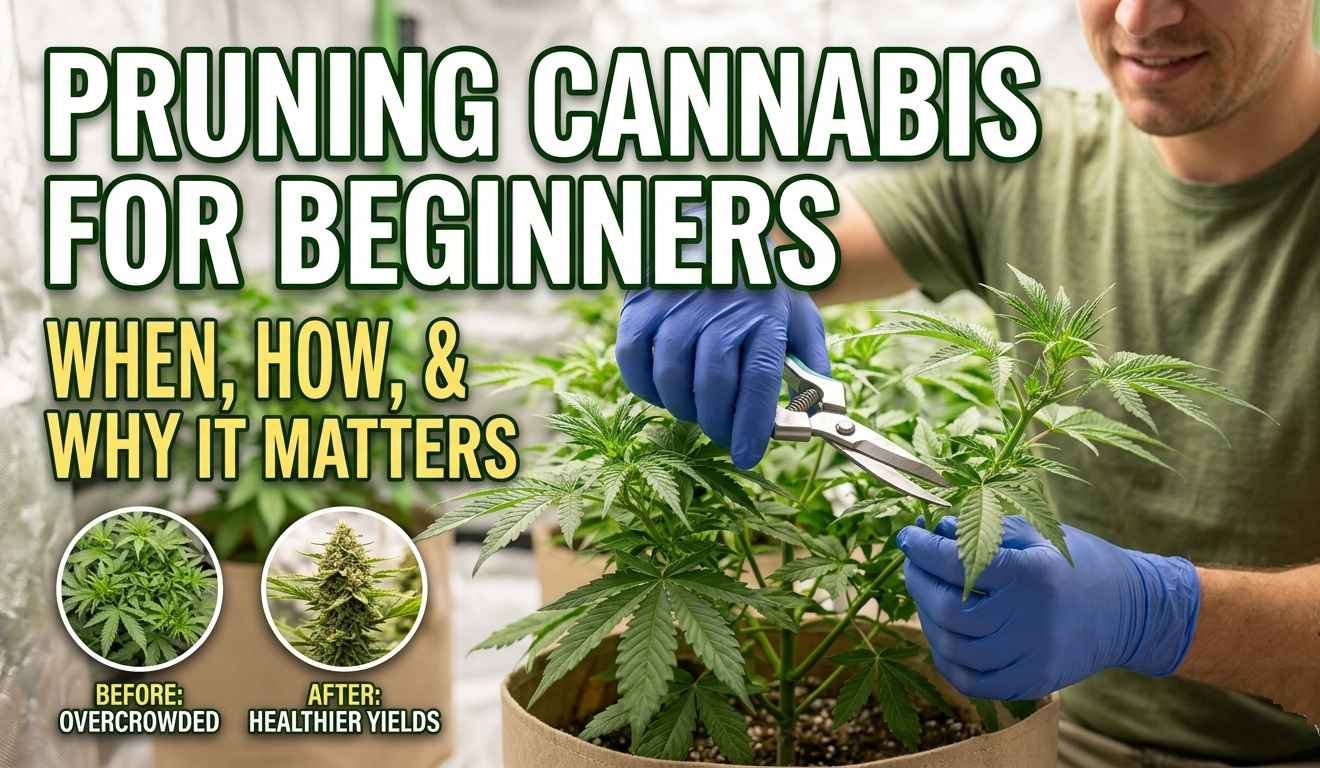
Pruning cannabis for beginners is one of the most important skills to learn if you want healthier plants and better yields. Many new growers either avoid pruning completely or overdo it, which can slow growth and reduce overall results.
The truth is simple. Proper pruning improves airflow, increases light exposure, and helps your plant focus its energy on producing stronger, higher quality buds. But timing and technique matter. Cutting too much or pruning at the wrong stage can stress the plant and limit its potential.
In this guide, you will learn exactly when to prune, how to do it safely, and which beginner friendly techniques actually work.
If you want to see the results of proper cultivation, you can always explore high quality cannabis products and compare how well grown flower looks, smells, and performs.
What Is Cannabis Pruning?
Before getting into techniques, it is important to understand what pruning cannabis for beginners actually means.
Pruning is the process of removing certain parts of the plant to improve its growth and structure. This includes cutting off unnecessary leaves, weak branches, or overcrowded areas so the plant can grow more efficiently.
What Pruning Means in Cannabis Growing
In cannabis cultivation, pruning means selectively removing parts of the plant that are not contributing to healthy growth.
This can include yellowing leaves, small lower branches, or areas that block light from reaching important bud sites. The goal is not to damage the plant but to guide its energy toward better growth.
Why Cannabis Plants Need Pruning
Cannabis plants naturally grow dense, especially indoors or in controlled environments. Without pruning, this density can block light and reduce airflow.
Pruning helps:
- Light reach lower parts of the plant
- Air move freely between branches
- Reduce the risk of mold and pests
- Improve overall plant structure
For beginners, this is one of the easiest ways to improve plant health without advanced techniques.
Pruning vs Trimming
A common mistake in pruning cannabis for beginners is confusing pruning with trimming.
Pruning happens during the growing process to shape the plant and improve development. Trimming happens after harvest and focuses on removing leaves from the buds.
Both are important, but they serve completely different purposes.
Why Pruning Cannabis Is Important for Beginners
Learning pruning cannabis for beginners early can make a major difference in how your plants grow and how much they produce.
Without pruning, plants can become overcrowded, uneven, and less efficient.
Improves Light Exposure
Light is one of the most important factors in cannabis growth.
When plants become too dense, upper leaves block light from reaching lower bud sites. Pruning opens up the plant, allowing light to spread more evenly and support better growth throughout.
Increases Airflow
Good airflow helps prevent common problems like mold, mildew, and pests.
By removing excess leaves and branches, pruning allows air to move freely through the plant. This creates a healthier growing environment, especially in indoor setups.
Helps Bigger Bud Development
Cannabis plants have limited energy.
If too many small or weak branches are left on the plant, energy gets spread out. Pruning removes these weaker areas so the plant can focus on producing larger, denser buds at the top.
Prevents Overcrowding
Overcrowded plants are harder to manage and more likely to develop issues.
Pruning keeps the structure clean and organized, making it easier to monitor plant health and maintain proper growth conditions.
When to Start Pruning Cannabis Plants
Timing is one of the most important parts of pruning cannabis for beginners. Pruning at the right stage helps the plant grow stronger, while pruning at the wrong time can slow it down.
Pruning During Vegetative Stage
The vegetative stage is the best time to prune cannabis plants.
During this phase, the plant is focused on growing leaves and branches. This makes it more resilient and able to recover quickly after pruning.
This is when you should:
- Remove weak lower branches
- Shape the plant structure
- Improve light distribution
Pruning During Flowering Stage
Pruning during flowering should be minimal.
At this stage, the plant is focused on producing buds. Heavy pruning can stress the plant and reduce yield.
Light pruning may still be done early in flowering, mainly to remove dead leaves or improve airflow, but it should be done carefully.
When Not to Prune
There are certain times when pruning should be avoided completely.
Do not prune during:
- The early seedling stage, when the plant is still fragile
- Late flowering, when the plant is focused on final bud development
Understanding timing is a key part of mastering pruning cannabis for beginners.
Basic Pruning Techniques for Beginners
If you are learning pruning cannabis for beginners, start with simple, low risk techniques. These basic methods are easy to apply and can improve plant health without causing unnecessary stress.
Removing Dead or Yellow Leaves
This is the safest and easiest place to start.
Dead or yellow leaves do not contribute to growth and can block airflow. Removing them helps the plant stay clean and reduces the risk of mold or pests.
If you are unsure where to begin, this step alone can make a noticeable difference.
Cutting Lower Weak Branches
Lower branches often receive less light and produce smaller, less developed buds.
By removing these weak branches, the plant can redirect its energy toward stronger top growth. This leads to better bud development where it matters most.
This technique is a core part of pruning cannabis for beginners because it improves efficiency without being too aggressive.
Thinning Out Dense Areas
When plants grow thick and crowded, light and air struggle to reach inner sections.
Carefully removing some leaves and small branches helps open up the plant. This improves airflow and allows light to reach more bud sites, resulting in healthier growth.
Avoid Over Pruning
One of the biggest mistakes beginners make is removing too much at once.
Over pruning can stress the plant, slow growth, and reduce yield. A good rule is to remove only what is necessary and give the plant time to recover before making more cuts.
With pruning cannabis for beginners, less is often better.
Popular Pruning Methods Explained
Once you understand the basics of pruning cannabis for beginners, you can explore more advanced techniques. These methods are used to shape plant growth and improve yields, but they should be applied carefully.
Topping
Topping involves cutting the main stem of the plant.
This encourages the plant to grow multiple main branches instead of one, resulting in a bushier structure and more potential bud sites.
Fimming
Fimming is similar to topping but slightly less precise.
Instead of cutting the entire top, only part of it is removed. This can lead to even more growth points, though results can be less predictable.
Lollipopping
Lollipopping focuses on removing lower growth that does not receive enough light.
By clearing out the bottom portion of the plant, energy is directed to the top buds, which are more likely to develop fully.
Defoliation
Defoliation involves selectively removing leaves to improve light penetration.
This method is useful for dense plants but should be done carefully to avoid stressing the plant.
For beginners, these techniques should be used gradually as you gain confidence with pruning cannabis for beginners.
Tools Needed for Pruning Cannabis
Using the right tools is essential for successful pruning cannabis for beginners. Clean and sharp tools make precise cuts and reduce the risk of damaging the plant.
Pruning Scissors or Shears
A good pair of sharp scissors or pruning shears is the most important tool.
Clean cuts help the plant heal faster and prevent unnecessary stress.
Gloves
Cannabis plants can be sticky due to resin.
Wearing gloves keeps your hands clean and prevents oils or contaminants from transferring to the plant.
Sanitizing Tools
Always sanitize your tools before and after pruning.
This helps prevent the spread of bacteria, mold, or disease between plants. Simple alcohol wipes or disinfectants work well.
Having proper tools makes pruning cannabis for beginners safer and more effective.
Common Mistakes Beginners Make When Pruning
Mistakes are common when learning pruning cannabis for beginners, but avoiding these issues can save your plants from unnecessary stress.
Pruning Too Much at Once
Removing too many leaves or branches at one time can shock the plant.
This slows growth and may reduce yield. Always prune gradually and observe how the plant responds.
Pruning at the Wrong Time
Timing matters.
Pruning too early or too late in the plant’s life cycle can interfere with healthy development. The vegetative stage is usually the safest time.
Using Dull or Dirty Tools
Dull tools can tear plant tissue instead of making clean cuts.
Dirty tools can introduce infections. Always use sharp, sanitized equipment.
Ignoring Plant Recovery Time
After pruning, plants need time to recover.
Cutting again too soon can cause stress and limit growth. Give your plant time to adjust before making additional changes.
Avoiding these mistakes is key to mastering pruning cannabis for beginners.
How Pruning Affects Yield and Potency
Proper pruning cannabis for beginners does more than improve plant appearance. It directly impacts yield and overall quality.
Bigger and Denser Buds
When energy is focused on fewer, stronger branches, buds tend to grow larger and denser.
Removing weak growth allows the plant to concentrate resources where they matter most.
Better Light Distribution
Pruning improves how light reaches the entire plant.
More light reaching lower bud sites means more consistent growth and better overall yield.
Does Pruning Increase THC?
Pruning does not directly increase THC levels.
However, healthier plants with better light exposure and airflow can produce higher quality buds, which may result in better potency overall.
If you want to understand how potency is measured, you can read What Is a High THC Percentage in Flower, which explains THC levels and how they affect your experience
Indoor vs Outdoor Cannabis Pruning
When learning pruning cannabis for beginners, it is important to understand that indoor and outdoor plants are not treated the same. The environment plays a major role in how aggressively you should prune.
Indoor Pruning Tips
Indoor growing gives you full control over light, humidity, and space.
Because of this, indoor plants often grow denser and require more frequent pruning. You can shape the plant more aggressively to improve light distribution and airflow since natural conditions are limited.
Indoor pruning usually focuses on:
- Opening up dense canopies
- Removing lower growth that does not get light
- Controlling plant height and structure
Outdoor Pruning Tips
Outdoor plants grow under natural sunlight, which reaches more parts of the plant.
Because of this, pruning should be less aggressive compared to indoor setups. Over pruning outdoors can reduce the plant’s ability to absorb sunlight and slow down growth.
Outdoor pruning is mainly used to:
- Remove damaged or weak branches
- Improve airflow in humid environments
- Maintain plant shape
Environmental Considerations
Environmental factors heavily influence pruning cannabis for beginners.
- High humidity increases the need for airflow pruning
- Limited light requires more strategic leaf removal
- Small grow spaces need better plant control
Understanding your environment helps you decide how much and how often to prune.
Where to Learn More About Quality Cannabis in Denver
High quality cannabis does not happen by accident. Proper techniques like pruning play a major role in how the final product looks, smells, and feels.
When plants are grown and maintained correctly, including proper pruning, they produce better structured buds with improved airflow and light exposure during growth.
Dispensaries in Denver offer a wide range of cannabis flower that reflects these cultivation practices. From dense, well trimmed buds to balanced terpene profiles, you can often see the difference that proper growing techniques make.
If you want to explore different options, you can browse cannabis products in our Denver shop and compare quality across strains and formats.
There are also deals available that make it easier to try high quality products, including the $39 cannabis ounce deal and 5 pre roll joints for $20.
Frequently Asked Questions About Pruning Cannabis for Beginners
How often should you prune cannabis plants?
Pruning frequency depends on the growth stage.
During the vegetative stage, you can prune every 1 to 2 weeks as needed. During flowering, pruning should be minimal and only done early if necessary.
Can pruning increase yield?
Yes, when done correctly.
Pruning helps the plant focus energy on stronger bud sites, which can lead to larger and denser buds. It also improves light exposure and airflow, both of which support better growth.
Is pruning necessary for cannabis?
Pruning is not strictly required, but it is highly beneficial.
Unpruned plants can still grow, but they are more likely to be overcrowded, less efficient, and produce smaller buds compared to properly pruned plants.
Can you prune during flowering?
You can prune lightly during early flowering, but it should be done carefully.
Heavy pruning during flowering can stress the plant and reduce yield. Most major pruning should be completed during the vegetative stage.
What happens if you over prune cannabis?
Over pruning can stress the plant and slow its growth.
Removing too many leaves or branches reduces the plant’s ability to produce energy, which can lead to smaller yields and weaker development.
Final Thoughts on Pruning Cannabis for Beginners
Learning pruning cannabis for beginners is one of the most effective ways to improve plant health and overall results.
Pruning helps create better airflow, improves light distribution, and allows the plant to focus its energy on producing stronger buds. However, success depends on doing it correctly.
Timing and technique matter more than anything. Pruning too much or at the wrong stage can do more harm than good, especially for beginners.
The best approach is simple. Start small, observe how your plant responds, and build your confidence over time.
If you want to see the results of proper growing techniques, you can explore lab tested cannabis products in our Denver dispensary and compare quality based on structure, density, and overall experience.