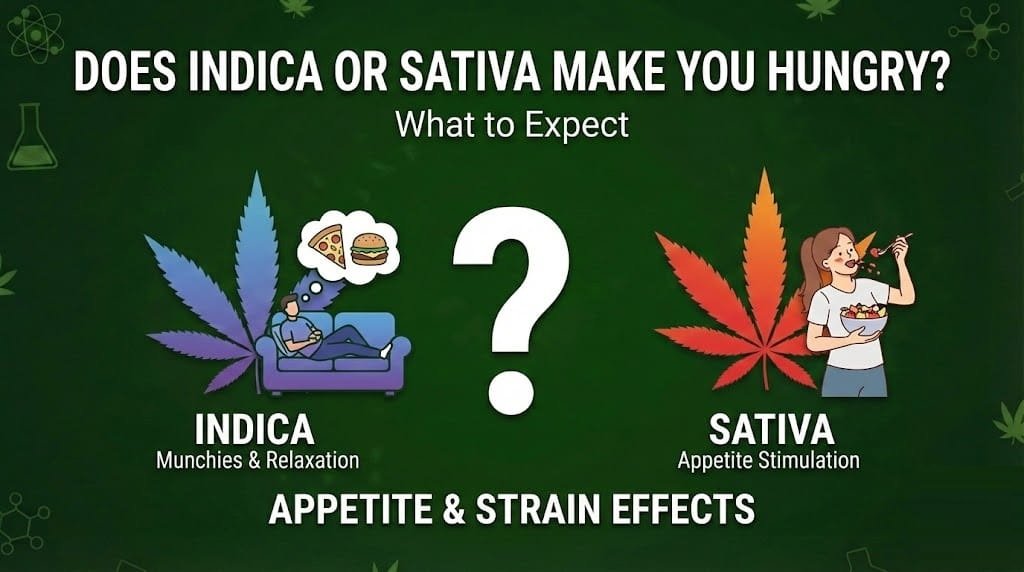
People search does indica or sativa make you hungry for a few clear reasons. Some want to avoid the classic “munchies.” Others are hoping cannabis might help stimulate appetite. And many are simply trying to decide what works better for daytime versus nighttime use.
Here’s the honest answer: both indica and sativa can increase appetite. Hunger isn’t controlled by the strain label alone. The biggest drivers are:
- THC content
- Dose
- Terpene profile
- Timing of use
An indica edible at night might feel snack-heavy because you’re relaxed and winding down. A high-THC sativa during the day can still trigger strong cravings. The label matters less than how much THC you consume and how your body responds.
👉 Browse lab-tested indica, sativa, and hybrid cannabis products in our Denver shop to compare THC strength and terpene details before choosing.
Why Cannabis Makes You Hungry
Cannabis increases appetite primarily because of THC’s interaction with CB1 receptors in the brain. These receptors help regulate hunger, mood, and reward.
Here’s what happens:
- THC activates CB1 receptors linked to appetite control
- It enhances smell and taste perception, making food more appealing
- It increases dopamine activity, boosting the reward response from eating
That’s why food can taste better and feel more satisfying after consuming cannabis.
It’s also worth noting:
- Appetite increase is common with THC-dominant products
- CBD-heavy products are generally less associated with strong hunger stimulation
Not everyone experiences intense cravings, but THC-related appetite changes are common.
Does Indica Make You More Hungry?
Indica strains are often associated with relaxation and evening use. That relaxed state can make snacking more likely, especially when paired with downtime.
Common reasons indica may feel more hunger-inducing:
- Deep body relaxation reduces activity
- Evening use aligns with natural hunger cycles
- Relaxing environments increase mindless snacking
But here’s the key point: indica doesn’t automatically mean more hunger. A low-dose indica may only produce mild appetite changes. Meanwhile, a high-THC product—regardless of type—can significantly increase cravings.
As always, dose and terpene profile matter more than the label.
Does Sativa Make You Hungry Too?
Yes, sativa can absolutely increase appetite.
While sativa strains are often described as energizing, THC still activates appetite-related pathways in the brain. In some cases:
- Mental stimulation may temporarily distract from hunger
- Higher THC sativa strains can still trigger strong munchies
- Appetite may increase later in the experience rather than immediately
Some users report less hunger with lighter, lower-dose sativa products. But once THC levels rise, appetite stimulation can occur regardless of strain category.
Overconsumption increases hunger across the board.
THC Dose and Hunger: The Real Factor
If you want the real answer to does indica or sativa make you hungry, look at the dose first.
- Low dose: Mild appetite increase or barely noticeable changes
- Moderate dose: Clear cravings and enhanced food enjoyment
- High dose: Strong munchies and increased likelihood of overeating
Most hunger effects come from THC quantity, not whether the product is labeled indica or sativa.
If you want to understand how dose influences other cannabis effects beyond hunger, see our guide on does indica or sativa make you sleepy
Terpenes That May Influence Appetite
Terpenes can shape how cannabis feels, including whether appetite stimulation feels stronger or more subtle. While research is still developing, some terpenes are commonly associated with certain experiences.
Terpenes Linked to Increased Appetite
- Myrcene – Often linked to relaxation and body-focused effects, which may indirectly encourage eating
- Caryophyllene – Associated with stress relief, which can support appetite in relaxed settings
Terpenes That May Feel More Neutral
- Pinene – Often described as more mentally clear and less body-heavy
- Limonene – Commonly associated with uplifted mood rather than strong sedation
That said, terpene influence varies widely from person to person. There’s no guaranteed formula for predicting hunger based on terpenes alone.
For a deeper terpene breakdown and how they influence different effects, see is indica or sativa better for pain.
Do Edibles Make You Hungrier Than Smoking?
Short answer: for many people, yes — edibles can make hunger feel stronger and last longer than smoking.
Here’s why:
- Edibles last longer (typically 6–8+ hours)
- They produce stronger body effects
- Appetite stimulation may extend for several hours
When you smoke or vape, THC enters the bloodstream quickly and peaks fast. With edibles, THC is processed through the liver and converted into 11-hydroxy-THC, a compound known for stronger and longer-lasting effects.
Because of this liver metabolism process:
- Effects build more slowly (30–90 minutes)
- Peak appetite may hit later
- Hunger can linger well beyond the initial high
That extended duration is why some people feel prolonged munchies after edibles compared to inhaled cannabis.
If you want a deeper breakdown of onset, peak timing, and duration, learn more about edible timing in hybrid edibles effects.
How to Avoid the Munchies
If your goal is to minimize appetite spikes, responsible use makes a big difference. The munchies are usually dose-related — not inevitable.
Here’s what helps:
- Choose lower THC products – High THC = stronger appetite response
- Microdose – Small, controlled amounts reduce intensity
- Eat before consuming – Prevents impulsive overeating
- Stay hydrated – Sometimes thirst feels like hunger
- Avoid late-night use – Nighttime relaxation + boredom = snack overload
Planning ahead matters. Keep healthy snacks available if cravings hit, and avoid high-dose experimentation on an empty stomach.
Responsible consumption isn’t about restriction — it’s about predictability.
Who Might Want Cannabis for Appetite Support?
While some people try to avoid hunger effects, others may find mild appetite stimulation helpful.
Examples include:
- Individuals with naturally low appetite
- People experiencing temporary stress-related appetite changes
- Those who simply want food to feel more enjoyable
Cannabis can enhance taste and sensory experience, which may make meals feel more satisfying. That said, responses vary widely by individual, dose, and product type.
Choosing balanced, lab-tested products and starting low allows you to explore effects responsibly without overdoing it.
Our Latest Cannabis Offers in Denver
If you’re exploring cannabis effects — including appetite response — choosing properly labeled, lab-tested products makes all the difference.
Here are some current options to consider:
- THC Gummies – 4 for $31 or 8 for $63
- 5 Pre-Roll Joints for $20
- Ask in-store about balanced hybrid options for moderate, manageable effects
Balanced hybrids can offer smoother, more predictable experiences compared to very high-THC products.
👉 Browse lab-tested cannabis products in our Denver shop to explore options responsibly and compare THC strength before purchasing.
Frequently Asked Questions: Does Indica or Sativa Make You Hungry?
Does indica always cause munchies?
No. Indica does not automatically cause munchies.
The biggest factor behind appetite stimulation is THC dose, not whether the product is labeled indica or sativa. A low-THC indica may produce minimal appetite changes, while a high-THC product of any type can trigger stronger cravings.
When people ask “does indica make you hungry?” they’re usually noticing the relaxing, nighttime effects that make snacking more convenient — not necessarily stronger biological hunger signals.
Can sativa reduce appetite?
Sometimes — temporarily.
Certain energizing sativa-leaning products may distract you from hunger at first due to mental stimulation. However, THC still activates appetite pathways, so hunger often appears later in the experience.
If you’re wondering “does sativa cause munchies?” the honest answer is yes, it can — especially at higher THC levels.
Does CBD cause hunger?
CBD is less associated with appetite stimulation compared to THC.
CBD does not strongly activate CB1 receptors in the same way THC does. Some users report neutral appetite effects with CBD-dominant products. That said, full-spectrum products containing THC may still increase hunger.
If appetite control is your goal, look for low-THC or CBD-forward options.
How long do cannabis munchies last?
It depends on the format and dose.
– Smoking or vaping: 2–4 hours typically
– Edibles: 4–8+ hours possible
– High-dose products: May extend hunger sensations longer
Because edibles are metabolized in the liver into 11-hydroxy-THC, the appetite effects can last significantly longer than inhaled cannabis.
Do hybrid strains make you hungry?
Yes, they can.
Hybrid cannabis appetite effects depend on THC percentage and terpene profile. A balanced hybrid may feel smoother and more moderate, but high THC hybrids can absolutely increase cravings.
This is why checking lab results matters more than focusing on strain labels alone.
Why does food taste better when high?
THC enhances sensory perception.
It heightens smell and taste while increasing dopamine activity in reward pathways. That combination makes flavors feel richer and more satisfying — which contributes to overeating cannabis snacks in some cases.
Can you control cannabis appetite effects?
Yes — mostly through dose control.
Microdosing, eating before consumption, staying hydrated, and avoiding very high THC products can significantly reduce unwanted munchies.
If you’re trying to avoid late-night overeating, timing matters just as much as strain type.
Do THC gummies make you more hungry than smoking?
Often, yes.
Because THC gummies last longer and produce stronger body effects, the appetite increase may feel more intense and extended compared to inhaled cannabis.
If you’re using edibles, start low and wait before increasing your dose.
Final Thoughts: Does Indica or Sativa Make You Hungry?
If you’re still asking “does indica or sativa make you hungry?” here’s the straightforward takeaway:
- Both indica and sativa can increase appetite
- THC dose is the primary driver
- Terpenes and timing influence intensity
- Smart dosing helps prevent unwanted overeating
The strain label alone doesn’t determine whether you’ll experience munchies. What matters most is:
- THC percentage
- Product format (smoking vs edibles)
- Personal tolerance
- When and how you consume
If you want to better understand related cannabis effects, you may also find these guides helpful:
- does indica or sativa make you tired
- hybrid edibles effects
- does THC gummies expire
- is indica or sativa better for pain
Understanding how cannabis interacts with appetite, energy, and body effects allows you to make informed decisions instead of relying on marketing labels.
Whether you’re trying to avoid munchies or explore appetite support responsibly, dose awareness and product knowledge are what truly make the difference.